

In the aftermath of COP30, Freddy Purcell argues that rich experience is fundamental in prompting moral change, creating a complex picture for issues on the world stage.
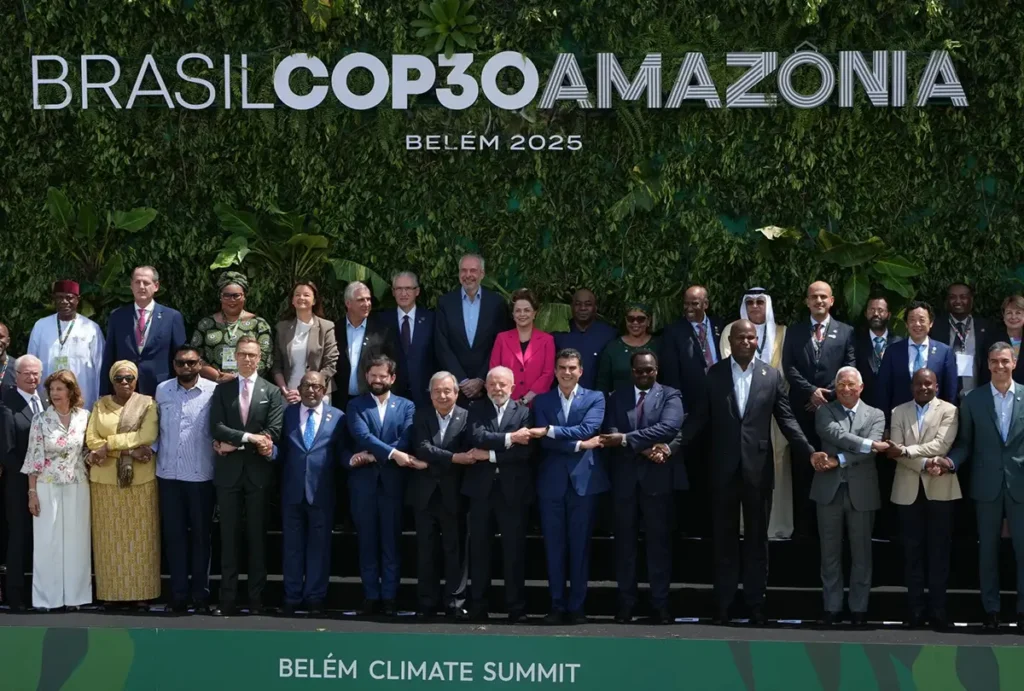
When COP30 ended on November 21st, the world appeared particularly divided on climate change. Despite intense discussions, the conference’s concluding deal failed to include any direct reference to fossil fuels, despite over 80 nations pushing to strengthen language encouraging governments to move away from non-green energy. While some progress was made on tackling deforestation and financially supporting smaller nations, this crucial vote paints a world at odds on environmental issues. While there are undoubtedly numerous factors at play, I want to examine one that I think is foundational to this divide and show how this creates an inherently complex account of moral progress on global issues.
My favourite account of how moral change occurs on a societal level comes from Pleasants (2010) in his examination of the abolition movement. The transatlantic slave trade started in the 16th century and went generally unchallenged until the latter part of the 18th century, when within a hundred years, the institution of slavery was abolished (ibid.). Taking abolition as a morally motivated movement, this timeline appears mysterious as it suggests that individuals suddenly realised the wrongness of slavery, so decided to abolish it. Early accounts of moral progress, like Moody-Adams (1997), reflect this idea by arguing that this change occurred because narratives from enslaved people and moral arguments captured the imaginations of individuals, helping them to realise the wrongness of slavery. This account, however, creates an abstract idea of moral change, relatively detached from social and material context. Pleasants (2010) convincingly argues that this context constrains the ability of individuals to imagine the world differently, preventing them from campaigning for moral change as certain practices can appear inevitable. In the case of slavery, there is evidence that people understood that being enslaved was negative but saw the practice as economically indispensable or struggled to comprehend the suffering of others when, in some cases, it was in distant lands (ibid.). Haskell (1985) argues that in Britain, the barriers that prevented individuals from conceiving of slavery as dispensable, began to dissolve with material change. As global trade made people aware that they could have a causal impact globally, they could comprehend the wrongs that people on the other side of the world were subjected to, as well as allowing them to imagine an economic world not dependent on slavery (ibid.). Once various social and economic contextual factors had shifted, criticism of slavery was therefore able to take hold and eventually result in its institutional abolition. I think this is a convincing account of how moral imagination and action is deeply constrained by contextual factors. However, I am not sure it translates smoothly to global issues like climate change.
In some ways, Pleasants’ analysis is illuminating when applied to climate change responses. For example, COP30 witnessed the beginning of a new fund to support developing nations in preserving their forests. Here, it is recognised that nations may be willing to protect their forests but consider deforestation an inevitable practice without economic support. The situation is more complex for resource rich nations that continue to resist green transitions, like the US, as they have better material capacity to imagine and create a different world, but we might say that social factors prevent change. While these factors are undoubtedly a complicated mix of political and social influences that of course won’t apply to all citizens, I would suggest that there is a more fundamental dynamic at work: the extent to which a certain issue is experientially accessible. I understand experiential access broadly as how rich an experience an individual can have of a certain thing. Limited access might include reading a brief article detailing an event, while deeper access would include living through that event. For an impactful case study of this idea, I want to turn to the country of Tuvalu.
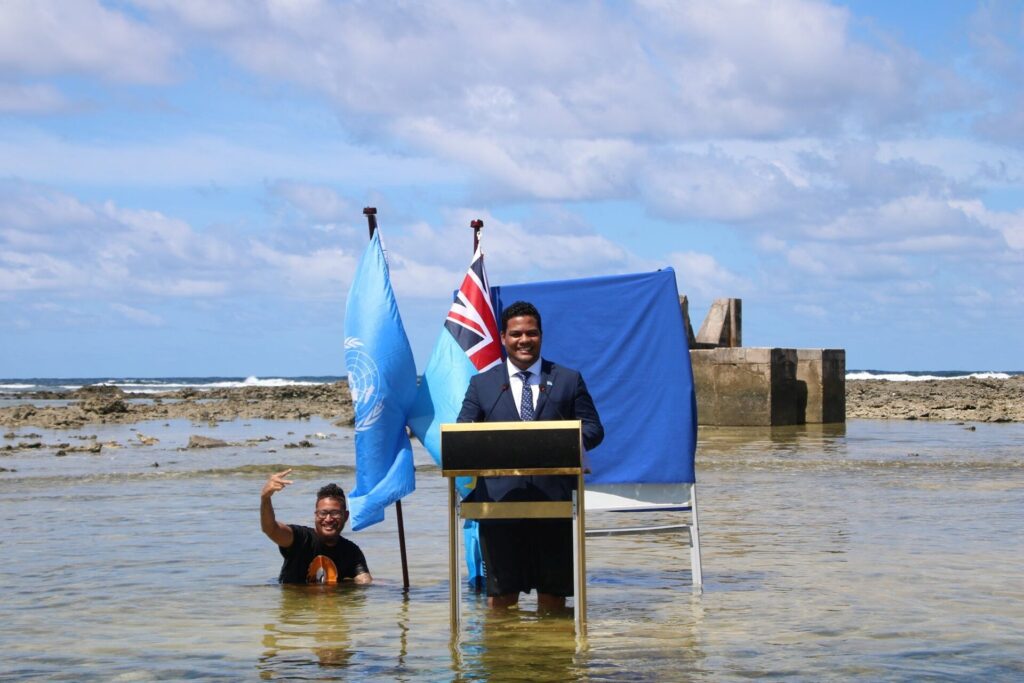
With representatives from 193 countries present at COP30, only one publicly denounced the Trump Administration: the climate minster from Tuvalu. Early in the summit, when delegates from many nations looked to the White House with fearful puzzlement as the US backed away from the climate conference and Paris agreement, Maina Vakafua Talia condemned Trump for showing a “shameful disregard for the rest of the world”. He continued to say that “we look the US for options, for peace, but it seems they are going in the opposite direction and we should hold them accountable”. Trump has shown his capacity to use tariffs in retaliation, so as a country largely dependent on subsistence farming and foreign aid, Tuvalu would appear to be an unlikely candidate to challenge the superpower.
However, any fear Talia might have felt of economic reprisal was unimportant compared to the immensely precarious environmental position Tuvalu exists in. Compromised of nine atolls and reef islands, Tuvalu’s highest point is only 4.6 metres above sea level, making it particularly vulnerable to rising waters and tropical storms. The Tuvaluan government therefore expects their capital to be flooded by 2050 and 90% of their land to be submerged by the end of the century, prompting them to preserve their sinking islands on the metaverse. Clearly therefore, Tuvalu’s climate minister’s bold actions are informed by the fact that his nation feels the impact of climate change more than most. This stark imperative to make meaningful environmental differences is seen across other vulnerable island nations in environmental decisions.
Unfortunately, Tuvalu lacks the power as a nation to change the course of climate change, or the influence to bring other countries to agree with their stance. However, in the face of an existential threat to their country, Tuvaluans have been forced to imagine creative ways to preserve their nation and have become some of the world’s boldest speakers on climate change. I would therefore suggest that it isn’t so much Tuvalu’s ability to imagine current environmental practices as dispensable that informs these actions, but the absolute necessity to do whatever possible to combat climate change. This experiential access to the impact of climate change therefore appears more fundamental than any other material or social constraint, as humans naturally act to preserve themselves in the face of an existential threat. Of course, any threat will be interpreted through a personal and socio-cultural lens, so I wouldn’t suggest that experience of environmental damage necessitates environmental action. However, I would suggest that more visceral, impactful experiences of environmental damage are likely to inform action. It seems very difficult to imagine Tuvaluans ignoring sea level rise and electing a climate change denier, for example. I think this would also explain why many of us can feel moved by stories of environmental catastrophe, but don’t dedicate our lives to activism. We often lack the sort of experience that pushes us in this direction. The claim that in person, material experiences are more impactful in connecting us to the environment is something I am currently exploring further in my dissertation.
I think this argument is compatible with Pleasants’ idea of moral change. Experiential access to a phenomenon is no guarantee of moral change, as I can imagine there being many examples of groups being painfully aware of a wrong, but lacking the ability to imagine a practice differently or change it. Many victims of institutional wrongdoing have likely experienced this. So experiential access is not sufficient, but I argue it is often necessary for moral change. In slavery for example, the obvious suffering that enslaved people felt was dismissed by thinkers, including Aristotle in his Politics(2016), as slaves were considered subhuman, diminishing the extent to which their suffering could be like other people’s. Debates around animal rights also often centre around the extent to which animals feel pain, or have agency, or a capacity to live a good life, and therefore how close they are to humans. In both cases, the decision on whether to pursue change hinges on how much we understand the suffering of another, and therefore how similar it is to our own experiences. I think this shows the deep constraint that experiential access can have on moral change.
Upon accepting that experiential access to phenomena is fundamental, nations appear to be divided by a deeper issue than wealth and politics with respect to environmental action. I think this is evident in the divisive voting at COP30, where it feels impossible to imagine every nation rallying towards the same action. The access that nations have (as a whole or through their citizens) to the impact of climate change exists along a sliding scale from immediate existential risk in the case of Tuvalu, to far less noticeable impact in other instances. While full international cooperation may be highly improbable, I’m not completely pessimistic about the future. It may emerge that smaller cooperations between nations can be more impactful in affecting change. Indeed, if nations like the US back out of global deals, this sort of cooperation may be necessary. Although experiential access naturally will vary between nations, there is hope that political cooperation is possible from various motivational standpoints. I also hope that nations will be able to empathise with those suffering from climate change related events to inform their environmental policy.
Bibliography:
Aristotle (2016) Aristotle’s Politics: Writings the complete Works: Politics, Economics, Constitution of Athens. Translated from the Ancient Greek by B.Jowett. Princeton University Press.
Haskell, T. (1985) ‘Capitalism and the Origins of the Humanitarian Sensibility, Part 1’, The American Historical Review, Vol.90, No.2, pp.339-361.
Moody-Adams, M. (1997) Fieldwork in Familiar Places:Morality, Culture and Philosophy. Cambridge: Harvard University Press.
Pleasants, N. (2010) ‘Moral Argument Is Not Enough: The Persistence of Slavery and the Emergence of Abolition’, Philosophical Topics, Vol.38, No.1, pp.159-180.